
One room can feel noticeably colder than the rest of the house even when the heating system seems to be running normally. The thermostat reads the temperature you set, the furnace or boiler is clearly running, and yet one bedroom, office, or finished basement stays cold.
That gap usually has a reason, and the reason is not always the heating equipment. Uneven heating can come from airflow, ductwork, where the thermostat happens to be mounted, insulation and windows, an individual heating zone, or the system itself. Sometimes several overlap, which is why it helps to understand the possibilities before assuming the worst.
Why Does One Room Stay Colder Than the Others?
Every room gains and loses heat at a different rate. A room above an unheated garage, a space with three exterior walls, or an addition built years after the original house behaves differently from a room in the middle of the floor plan.
Broadly, the causes fall into a few categories:
- How much heated air actually reaches the room
- The condition and routing of the ductwork
- Where the thermostat sits and what it is measuring
- Insulation, windows, and air leakage
- The baseboard, radiator, or zone serving that area
- How the furnace, boiler, or heat pump is performing
1. A Vent Is Blocked or Closed
On a forced-air system this is the easiest thing to rule out, and it happens more often than homeowners expect. A supply register can end up behind a couch, under a bed, covered by a rug, or hidden behind curtains. Registers also have dampers built in, and one can be closed from a previous season.
Walk the room and confirm the supply registers are open, unobstructed, and not blowing straight into furniture. Do the same for return vents, which need clear space to pull air back toward the system. If you find a closed damper, open it and give the system an hour or two. Anything past the register face is better left alone.
2. Airflow Is Unbalanced
Even with every vent open, rooms do not receive equal amounts of heated air. How much arrives depends on duct sizing, distance from the air handler, how many turns the air takes, and how well the return side is doing its job. A room at the end of a long duct run, on the top floor, or farthest from the equipment often gets less than a room close by.
Systems can be balanced to even this out, but that work involves measuring airflow and adjusting dampers inside the ducts, which is a technician’s job. If airflow at the register feels weak while the system is clearly running, mention it when you call.
3. Ductwork May Be Leaking or Restricted
Heated air only helps if it arrives. Ducts running through attics, crawlspaces, or unconditioned basements can develop problems that quietly reduce how much heat reaches part of the house:
- Joints that have separated or worked loose over time
- Sections that were crushed, kinked, or pinched
- Damaged or missing duct insulation in cold spaces
- Restrictions from debris or a collapsed flexible duct
- Runs that were poorly routed during an earlier renovation
A disconnected duct can dump much of the heated air into a basement or attic while the room it was meant to serve stays cold. Homeowners should not crawl into tight attics or crawlspaces to investigate; a technician can inspect the accessible portions and identify what needs attention.
4. The Thermostat May Not Reflect That Room
A thermostat measures temperature in one place: wherever it is mounted. Once that spot reaches the temperature you set, the system stops calling for heat, regardless of what the far bedroom is doing.
If it sits in a warm hallway, near a heat source, in direct sunlight, or in the most comfortable part of the house, it can satisfy itself early and leave colder rooms short. This is also why a single thermostat controlling a multi-level home so often produces complaints about one floor. The equipment is doing what it was told; it was just told by one room.
5. Windows, Insulation, or Air Leaks May Be the Real Issue
Sometimes the heating system is working properly and the room simply loses heat faster than the system can replace it. Common contributors include:
- Drafty or single-pane windows
- Rooms with two or three exterior walls
- Space above an unheated garage or over a crawlspace
- Missing, thin, or settled insulation
- Air leakage around window frames, doors, and other penetrations
- Finished attic or bonus rooms with limited insulation
A room like this can stay a few degrees behind no matter how well the equipment runs. Treating every comfort complaint as an equipment failure is how people end up replacing a working furnace and still having a cold room.
6. Baseboard or Radiator Heat May Not Be Working Properly
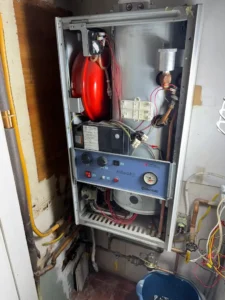
Homes with hot water baseboard or radiators have their own version of this. If the unit in the cold room stays cool to the touch while others warm up, heat is not reaching that section the way it should. Causes a technician will look at include:
- Air trapped in the piping or inside a radiator
- Circulation problems keeping hot water from reaching that loop
- A zone control or zone valve that is not opening
- A valve or control issue at the individual unit
Some systems allow a homeowner to bleed a radiator with a standard radiator key. Beyond that, boiler pressure, circulators, and zone controls are technician work. If the trouble appears to be in the units themselves, radiator repair and maintenance is a reasonable next step. Furniture pushed tight against a baseboard, or a cover packed with dust and pet hair, also restricts the air movement these systems need.
7. A Heating Zone May Not Be Calling for Heat
Many North Jersey homes are zoned, meaning different floors or sections have their own thermostat and controls. When one zone is comfortable and another is not, the issue often sits in that zone rather than in the heat source itself.
A zone can be interrupted by a thermostat that is not communicating, a zone valve that is not opening, a circulator or control board problem, or a wiring fault. If an entire floor stays cold while the rest of the house heats normally, say so when you call.
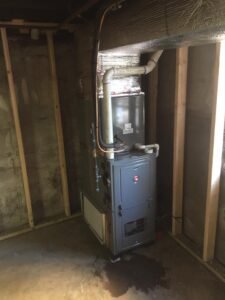
8. The Furnace or Heat Pump May Be Struggling
Equipment problems can contribute to uneven comfort too. A clogged filter or struggling blower restricts airflow everywhere, and the rooms at the end of the line feel it first. Short cycling, or weak airflow at every register, points back toward the equipment rather than one room. Heat pumps deserve their own note: their output drops as outdoor temperatures fall, so on the coldest days a heat pump may keep most of the house comfortable while the hardest-to-heat room falls behind.
None of this automatically means the system needs replacing. Many are maintenance or repair items, and a technician should confirm what is happening before replacement enters the conversation. When the equipment itself turns out to be the problem, furnace repair and installation work can be scheduled based on what the inspection finds.
What Can Homeowners Safely Check First?
A few minutes of observation before calling makes the visit more productive:
- Confirm supply registers and return vents are open and unobstructed
- Move furniture, rugs, and curtains away from registers and baseboards
- Check that the thermostat is set to heat and set above room temperature
- Note whether the problem affects one room, one floor, or one zone
- Note whether the room ever warms up or never does
- Check whether the rest of the house is heating normally
- Feel for obvious drafts around windows and exterior doors
- Check the air filter and replace it if it is dirty or overdue
Stop there. Opening equipment panels, adjusting boiler controls, or working inside ductwork is not homeowner territory.
When Should You Call an HVAC Technician?
Schedule service when:
- One room or zone never warms up, no matter how long the system runs
- An entire floor is affected
- Baseboards or radiators in that area stay cold while others heat
- Airflow at the registers is noticeably weak
- The system cycles on and off frequently
- You hear unusual noises from the equipment
- The thermostat appears to be calling for heat and nothing happens
- The problem goes away and keeps coming back
A quick safety note: if there is a gas smell, a carbon monoxide alarm sounding, smoke, visible flame outside the normal burner area, or another immediate safety concern, leave the affected area and contact the appropriate emergency or gas utility service rather than continuing to troubleshoot. If the home has lost heat entirely in cold weather, emergency heating repair is the right call.
Heating Service in Woodland Park and North Jersey
M&S Technician provides heating, furnace, boiler, baseboard and radiator, and general HVAC service for homeowners in Woodland Park and surrounding North Jersey communities. Whether a cold room turns out to be airflow, ducts, a zone control, or the equipment, the starting point is the same: look at the room and the system together instead of guessing. Our team handles heating repair in Woodland Park as well as broader residential HVAC service.
If one room, one floor, or one heating zone is staying cold, call M&S Technician at (908) 528-0535 to schedule heating service.
Frequently Asked Questions
Why is one bedroom colder than the rest of the house?
Usually it comes down to how much heated air reaches the room and how fast the room loses it. A blocked register, a long duct run, exterior walls, or weak insulation can each leave one bedroom behind.
Can ductwork cause one room to stay cold?
Yes. A duct that has come loose, been crushed, or lost its insulation delivers far less heated air to one area even while the furnace runs normally. Because most ducts are hidden, this takes an inspection to confirm.
Why are my baseboard heaters working upstairs but not downstairs?
When a whole floor stays cold while another heats fine, the cause usually sits with that zone rather than the boiler: trapped air, a circulation problem, or a zone valve that is not opening.
Can a thermostat cause uneven heating?
It can. A thermostat only reads temperature where it is installed, so if it sits in the warmest part of the house it may stop calling for heat before distant rooms catch up.
Does uneven heating mean I need a new furnace?
Not by itself. Uneven heating has several possible causes, and many have nothing to do with the furnace. Replacement should only come up after an inspection.