If your boiler has started banging, knocking, whistling, or making a strange kettle-like rumbling sound, it’s natural to wonder whether something is seriously wrong. The good news is that some of these noises have simple, low-risk explanations. Others are a sign that your heating system’s circulation, water pressure, or internal components need attention before a small issue turns into a bigger repair. This guide walks through what each type of noise usually means so you know what to watch for, and when it’s time to call a professional. We can’t diagnose your specific boiler remotely, so think of this as a starting point for understanding what you’re hearing, not a substitute for an in-person inspection.
What Does “Boiler Kettling” Mean?
“Kettling” is the term homeowners and technicians use for a boiler that sounds like a kettle coming to a boil, a rumbling, gurgling, almost-whistling noise that builds and fades. It’s one of the most common noise complaints we hear. In plain terms, kettling usually happens when water flow through the heat exchanger is restricted, or when heat isn’t transferring the way it should, so water locally overheats and creates steam bubbles that collapse with that rumbling sound. There isn’t one single guaranteed cause. Mineral buildup, airflow restrictions, and circulation problems can all produce a similar sound, which is part of why an in-person diagnosis matters.
1. Mineral or Scale Buildup
Over time, minerals naturally present in water can collect inside a boiler’s heat exchanger and pipework, especially in areas with harder water. As this scale builds up, it can narrow the space water flows through and insulate parts of the heat exchanger from the water meant to carry heat away. That combination is a classic contributor to kettling and rumbling noises. Addressing scale buildup typically involves specialized flushing or descaling procedures that are best left to a licensed technician, since they involve handling the system’s internal components and, in some cases, combustion equipment.
2. Air Trapped in the System
Heating systems are designed to run with water, and no air, filling the pipes and radiators. When air gets trapped, often after maintenance, a drained system, or a slow leak, it can collect at high points and interfere with normal water flow. This commonly shows up as knocking, gurgling, or clunking sounds, along with radiators that heat unevenly or have cold spots near the top. In some systems, homeowners can safely bleed a radiator using a standard radiator key, but if the noise continues afterward, or you’re not comfortable doing it yourself, it’s a reasonable job to leave to a professional.
3. Water Pressure Problems
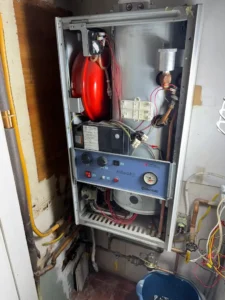
Boilers are designed to run within a specific pressure range, and both high and low pressure can contribute to unusual noise. Low pressure can starve parts of the system of water flow, while high pressure puts extra strain on components and safety valves. Most boilers have a pressure gauge that’s easy to check, and many manufacturers mark a safe operating range directly on it. If your pressure reads noticeably outside that range, it’s worth having a technician take a look. We’d stop short of recommending homeowners adjust pressure valves themselves beyond checking the gauge, since the right fix depends on what’s causing the pressure to drift in the first place.
4. Pump or Circulation Issues
The circulator pump is what keeps hot water moving between the boiler and your radiators or baseboard heat. When a pump is wearing out, partially blocked, or working harder than it should, it can create noise, from a persistent whine to a knocking rhythm, and it also means your system is working inefficiently to heat your home. Circulator pumps involve electrical connections and should only be opened, tested, or repaired by a trained technician.
5. Expansion and Contracting Pipes
As heating pipes warm up and cool down, the metal expands and contracts slightly, and in some installations this creates a ticking or knocking sound as pipes shift against joists, brackets, or other building materials. This is common and often harmless, especially in older homes. That said, if the noise is loud, happens every single heating cycle, or seems to be getting worse over time, it’s worth having a technician confirm that’s really what’s going on rather than assuming it.
6. Loose or Aging Components
Boilers have moving and vibrating parts, fan motors, pump housings, mounting brackets, that can loosen over years of normal operation. A rattle, buzz, or bang that tracks with the burner firing or the pump running can often be traced to a part that’s worked itself loose or simply worn out with age. We wouldn’t recommend taking the boiler apart to find this on your own; a technician can isolate the source safely during a service visit.
When Is Boiler Noise a Sign You Should Call a Technician?
Some noise is minor and easy to explain. Other times, it’s your system telling you something needs attention soon. Consider calling a professional if you notice:
- Loud banging that’s new or getting worse
- Repeated kettling or whistling that doesn’t go away
- A pressure gauge reading outside the normal range
- Uneven heat between rooms or radiators
- The system repeatedly shutting down or short-cycling
- Any leaks around the boiler
- A burning or unusual electrical smell
- The boiler not keeping your home warm
- Noise paired with a noticeable drop in heat output
If your boiler stops producing heat entirely while you’re waiting on a repair, our guide to emergency heating repair covers safe steps to take in the meantime.
Safety note: If there is a suspected gas smell, a carbon-monoxide alarm sounding, smoke, a visible flame outside the normal burner area, or another immediate safety concern, occupants should leave the affected area and contact the appropriate emergency service or gas utility rather than continuing to troubleshoot.
Can You Prevent Boiler Noise?
While not every noise is avoidable, routine maintenance goes a long way toward catching small issues, scale buildup, trapped air, a pressure drift, before they turn into bigger problems or louder noises. A few habits that help:
- Schedule routine maintenance so a technician can check pressure, circulation, and the heat exchanger before problems develop
- Have recurring pressure or circulation issues checked rather than repeatedly topping off pressure without knowing why
- Address small or occasional noises early instead of waiting for them to get worse
- Keep the area around your boiler clear so it can be serviced easily
- Follow your manufacturer’s guidance on service intervals
None of this guarantees a silent system forever, but it does reduce the odds of a small noise turning into a no-heat emergency.
Boiler Service in North Jersey
M&S Technician provides boiler and heating service for Woodland Park and surrounding North Jersey homeowners. We handle this kind of noise diagnosis regularly for homeowners across the area, including boiler repair in Hackensack, as well as heating repair in Woodland Park and the surrounding towns. Whether you’re hearing a new noise, dealing with an older system that’s never run quietly, or you just want a second opinion before winter, we’re glad to take a look and explain what we find in plain language.
If your boiler is making new or persistent noises, call M&S Technician at (908) 528-0535 to schedule boiler service.
Frequently Asked Questions
Is a banging boiler dangerous?
Banging alone usually points to trapped air or sediment movement rather than immediate danger, but it shouldn’t be ignored, especially if it’s new, loud, or paired with other symptoms like leaks or pressure changes. If you ever smell gas or notice a carbon-monoxide alarm, treat that as an emergency and leave the area.
What causes boiler kettling?
Kettling is typically linked to restricted water flow or heat-transfer issues inside the heat exchanger, often related to mineral or scale buildup. A technician can confirm the specific cause for your system.
Why is my boiler whistling?
Whistling can be related to circulation issues, trapped air, or water flow restrictions. Because several different problems can produce a similar sound, an in-person check is the most reliable way to pin down the cause.
When should I call for boiler repair?
Call sooner rather than later if the noise is new, worsening, or paired with uneven heat, pressure problems, leaks, or a system that keeps shutting off. Addressing these early is usually simpler and less costly than waiting.