Flushing your water heater is one of the easiest things you can do to extend its life, and one of the most commonly skipped. If you’ve never flushed yours, this guide will walk you through the process. It’s a 30-to-45-minute job for most homeowners, and doing it once a year can add years to your tank’s lifespan.
Here’s how to do it safely.
Why Flushing Matters
Over time, minerals dissolved in the water settle out and form a layer of sediment at the bottom of the tank. In a year, you might get a thin layer. In ten years, that layer can be inches thick.
That sediment causes real problems:
- Reduces the tank's hot water capacity (sediment takes up space)
- Insulates the burner from the water in gas heaters, dropping efficiency
- Speeds up corrosion of the inner tank
- Causes that rumbling or popping sound during heating
- Shortens the tank's lifespan
A flush removes the sediment and restores the tank to closer-to-new performance. Doing it yearly is recommended. In our area, where the water has moderate mineral content, yearly is genuinely the right interval.
How Often to Flush in Woodland Park
For our area: once a year is the standard recommendation.
If your tank has never been flushed and is over 5 years old, the first flush may not get everything out, sediment can harden over time. Doing one flush, then another a few months later, sometimes gets more out. After that, annual is enough.
Tools You'll Need
- A standard garden hose (long enough to reach a drain or outside)
- A bucket (in case the hose can't reach a drain)
- A flathead screwdriver (for some drain valves)
- Heavy work gloves
- A flashlight
That’s it. Nothing exotic.
Step-by-Step: How to Flush a Water Heater
These steps work for both gas and electric tanks. There are a couple of differences I’ll flag along the way.
- 1. Turn off the heat. For a gas water heater, turn the gas control valve to “off” or “pilot” (depending on the unit). For an electric heater, flip the breaker labeled “water heater” at your electrical panel. SAFETY: don’t skip this. Heating an empty tank can damage components.
- 2. Shut off the cold-water supply. There’s a valve at the top of the tank where the cold-water line enters. Turn it off.
- 3. Open a hot-water tap somewhere in the house. This breaks the vacuum and lets water flow out cleanly. The faucet farthest from the heater works well. Leave it open the whole time.
- 4. Wait for the water to cool. The water in the tank is around 120-140°F. Flushing while it’s that hot is a burn risk. Some people drain hot water on purpose for the cleaning effect, but if you’re new to this, give it 30 to 60 minutes to cool first.
- 5. Connect a garden hose to the drain valve. The drain valve is at the bottom of the tank. Thread the hose on by hand, don’t use a wrench, you can damage the valve. Run the other end of the hose to a floor drain, a utility sink, or outside.
- 6. Open the drain valve. Some valves are levers, some are screwdriver-slot. Open it slowly. Water will start flowing out the hose. SAFETY: even cooled water from a heater can be warm. Watch your hands.
- 7. Let the tank drain fully. This takes 10 to 30 minutes depending on tank size and how much sediment is in there. The first water out will probably be discolored. Watch for the flow to slow down, that’s sediment partially blocking the valve.
- 8. Flush with fresh water. Once the tank is empty, briefly open the cold-water supply at the top while keeping the drain valve open. This stirs up remaining sediment and pushes it out. Repeat until the water coming out the hose runs clear.
- 9. Close the drain valve. Disconnect the hose. Make sure the valve is fully closed, drips here become leaks.
- 10. Refill the tank. Close the hot-water tap inside the house, then turn the cold-water supply back on. Watch the open hot-water faucet, once water flows steadily without sputtering air, the tank is full. Then turn the heat back on (gas valve to “on” or breaker back on).
It’ll take 20 to 40 minutes for the water to fully reheat. Don’t run hot water until then.
Gas vs. Electric: What's Different
The flushing process is the same. The differences are in shutting down and starting up.
- Gas: turn the gas valve to "off" or "pilot." After refilling, turn back to "on" and confirm the burner fires.
- Electric: flip the breaker off. After refilling, flip it back on. Some units have a reset button on the upper thermostat, only press if needed.
For electric heaters: never turn the breaker back on with the tank empty. The elements will burn out in seconds.
Tankless Flushing (Different Process)
Tankless water heaters need flushing too, but it’s actually descaling, not draining. Scale builds up on the heat exchanger and reduces efficiency. The process involves:
- Isolating the unit using service valves (most tankless units have them built in)
- Connecting a small pump and circulating a descaling solution (usually white vinegar or a manufacturer-recommended product) through the heat exchanger for 45-60 minutes
- Flushing with fresh water afterward
Most homeowners hire this out because it requires the pump and the service valves. A typical tankless flush runs $150 to $250 from a contractor.
Signs Flushing Isn't Enough
Flushing helps, but it can’t fix every problem. If you’re seeing any of these, the tank needs replacement, not maintenance:
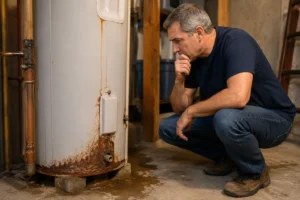
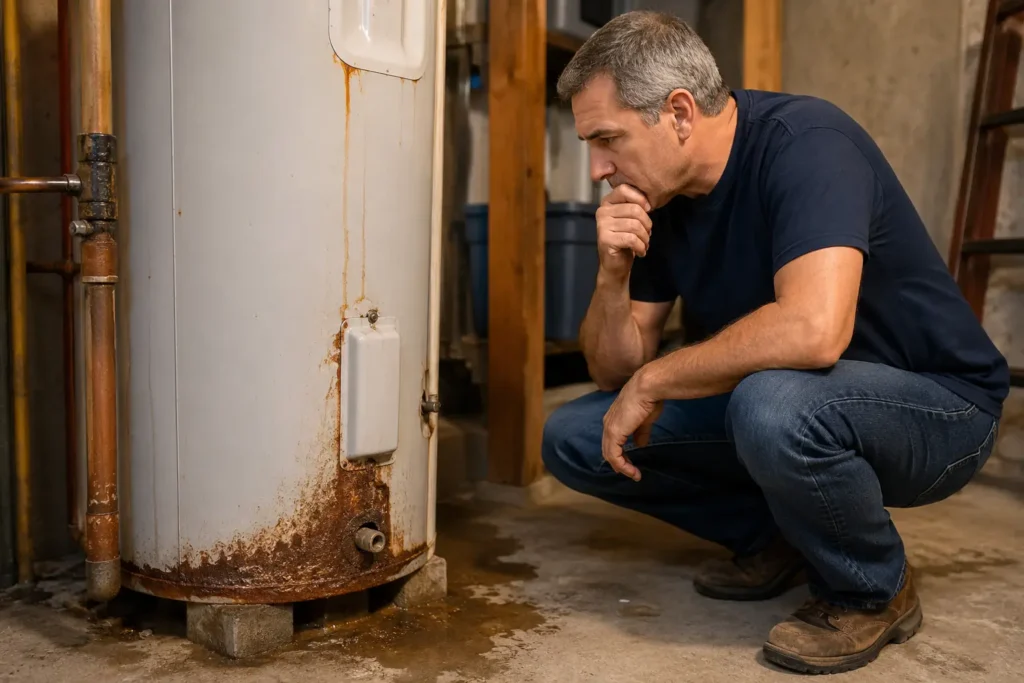
- Rusty water from the hot tap
- Visible water at the base of the tank
- Tank is over 12 years old
- Loud rumbling that doesn't go away after a flush
- Hot water doesn't last like it used to
If any of those apply, a flush is throwing good time after bad. Call us.
When to Call M&S Technician Instead
If you’re not comfortable with any step above, call. There’s no shame in it. Common reasons we get flush calls:
- Drain valve is stuck open or won't close after the flush
- Tank won't refill properly (air locked)
- Strange noises after restart
- You'd rather have someone else do it
A professional flush from M&S Technician is typically $100 to $175 for a tank, $150 to $250 for a tankless. We can also do it as part of a general service call.
Frequently Asked Questions
Do you offer same-day water heater service in Woodland Park?
Yes. We schedule same-day service Monday through Saturday whenever our route allows. Flushes can usually be added to a maintenance visit. Call (908) 528-0535.
Do you serve all Woodland Park neighborhoods?
Yes. We’re based right in Woodland Park, so every neighborhood is within minutes. We also cover surrounding towns including Little Falls, Totowa, Clifton, and Wayne.
Do you flush both tankless and traditional tank water heaters?
Yes. We do tank flushes and tankless descaling. The processes are different, but we handle both regularly.
Is flushing covered under a maintenance plan?
Annual maintenance plans typically include water heater flushing as part of the service. Ask about what’s covered when you call.
Are you licensed and insured in New Jersey?
Yes. M&S Technician holds NJ HVAC License #368100867400 and carries full liability insurance. We’ve been a licensed contractor in North Jersey since 2014.
Need a Hand?
Whether you want us to flush it for you or you’re stuck mid-DIY, call M&S Technician at (908) 528-0535. We can usually fit a flush into a same-day or next-day window.
M&S Technician. Licensed HVAC contractor in Woodland Park, NJ. Same-day water heater service across Passaic County.
Phone: (908) 528-0535 (click-to-call on mobile) Address: 4 Winslow Place, Woodland Park, NJ 07424 Hours: Mon–Sat 9:00 AM – 8:00 PM NJ HVAC License #368100867400