If you’re planning to upgrade your heating system or cooling system in 2026, you need to read this before you spend a single dollar.
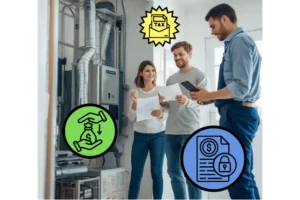
Federal tax credits, state incentives, utility company rebates, and manufacturer promotions can reduce your HVAC upgrade costs by $2,000-3,500 or more this year. That’s not a typo. We’re talking about thousands of dollars in legitimate incentives that can slash your net investment by 30-50%.
But here’s the catch: these incentives have specific requirements, application deadlines, and qualification criteria that most homeowners in Woodland Park and Bergen County don’t understand. Miss one requirement and you lose hundreds or thousands in savings. Choose equipment that’s slightly below the efficiency threshold and you’re ineligible for credits worth $600-1,200.
At M&S Technician, we navigate these incentive programs daily. We’ve helped hundreds of homeowners maximize their available savings, and we’ve seen just as many people leave money on the table because they didn’t know what was available or how to claim it.
Today we’re breaking down all significant 2026 HVAC tax credits and rebates in NJ. You’ll learn what’s available, which equipment qualifies, how to claim each incentive, and how to stack multiple programs for maximum savings. Consider this your complete roadmap to keeping more of your money while upgrading to efficient, reliable HVAC equipment.
Understanding the Federal Energy Efficiency Tax Credit for 2026
The federal government provides tax credits for high-efficiency HVAC equipment as part of broader energy efficiency initiatives. These credits can dramatically reduce your net cost, but understanding exactly what qualifies is essential.
The Energy Efficient Home Improvement Credit covers HVAC equipment installed in your primary residence. This is a tax credit, not a deduction, which means it reduces your tax liability dollar-for-dollar. A $1,000 tax credit saves you $1,000 on your taxes, making these significantly more valuable than deductions.
2026 HVAC equipment eligible for federal tax credits:
Central air conditioners must meet specific efficiency standards to qualify. The system must achieve a SEER2 (Seasonal Energy Efficiency Ratio 2) rating of 16 or higher and an EER2 (Energy Efficiency Ratio 2) of 12 or higher. These are the updated efficiency metrics that replaced the older SEER and EER ratings.
The tax credit for qualifying central AC systems is up to $600. This applies to the cost of equipment and installation, with the credit capped at $600 regardless of total system cost.
Heat pumps qualify for higher credits because they provide both heating and cooling. Air-source heat pumps must achieve SEER2 of 16 or higher and HSPF2 (Heating Seasonal Performance Factor 2) of 9 or higher to qualify.
The tax credit for qualifying heat pumps is up to $2,000. This substantially higher credit reflects the government’s push toward electrification and heat pump adoption as a climate solution.
Gas furnaces must meet or exceed 95% AFUE (Annual Fuel Utilization Efficiency) to qualify for federal credits. Standard efficiency furnaces rated 80-92% AFUE do not qualify.
The tax credit for qualifying gas furnaces is up to $600.
Oil furnaces must achieve 90% AFUE or higher to qualify, with the same $600 maximum credit as gas furnaces.
Important qualification requirements:
The equipment must be installed in your primary residence, not a rental property or vacation home. Second homes and investment properties do not qualify for residential energy tax credits.
Installation must occur between January 1, 2026, and December 31, 2026, to claim the credit on your 2026 tax return filed in 2027. Equipment purchased in 2025 but installed in 2026 qualifies for 2026 credits based on installation date, not purchase date.
You must have sufficient tax liability to use the credit. These are non-refundable credits, meaning they can reduce your tax bill to zero but won’t generate a refund beyond what you’ve paid. If your total tax liability is only $400 but you have a $600 credit, you can only use $400 of it (though some unused credits may carry forward depending on specific program rules).
Documentation requirements are strict. You’ll need the Manufacturer’s Certification Statement showing the equipment meets efficiency requirements. Manufacturers provide these statements for qualifying equipment. You’ll also need proof of purchase and installation costs.
Keep all documentation for at least three years after filing the tax return claiming the credit. The IRS may request verification, and without proper documentation, your credit could be denied.
M&S Technician provides all necessary documentation for federal tax credit claims, including manufacturer certifications, detailed invoices showing equipment specifications, and installation dates. We ensure you have everything needed to claim your credits without complications.
New Jersey State Incentive Programs for 2026
Beyond federal credits, New Jersey offers state-level incentives through various programs designed to promote energy efficiency and reduce carbon emissions.
New Jersey Clean Energy Program (NJCEP) provides substantial rebates for residential HVAC upgrades that meet program requirements. These rebates combine with federal tax credits, allowing you to stack incentives for maximum savings.
Home Performance with ENERGY STAR program offers comprehensive incentives for whole-home energy improvements including HVAC upgrades. This program takes a holistic approach, evaluating your entire home and providing larger incentives when HVAC work is combined with insulation, air sealing, and other improvements.
Participating in this program requires a home energy assessment by a certified Building Performance Institute (BPI) professional. The assessment identifies all cost-effective improvements and determines your rebate eligibility.
HVAC rebates through Home Performance with ENERGY STAR can reach $4,000-5,000 when combined with other improvements. The exact amount depends on the specific work performed and measured energy savings achieved.
The program requires post-installation testing to verify improvements deliver promised energy savings. This quality assurance step ensures homeowners receive genuine value from their investments.
HVAC Equipment Rebates (Direct Install programs) provide simpler rebate structures for homeowners upgrading HVAC equipment without whole-home improvements. These programs have straightforward efficiency requirements and fixed rebate amounts.
Central air conditioners must achieve SEER2 ratings of 16 or higher to qualify for New Jersey rebates. Rebate amounts typically range from $300-500 depending on efficiency tier and program funding availability.
Heat pump rebates are more generous, reflecting state priorities around electrification. Air-source heat pumps can qualify for rebates of $500-1,000, with higher amounts for cold-climate heat pumps rated for efficient operation at temperatures below 5°F.
High-efficiency furnaces (95% AFUE or higher) may qualify for rebates of $250-400. These rebates help offset the cost premium of high-efficiency models over standard equipment.
Smart thermostats that meet ENERGY STAR requirements qualify for rebates of $50-75. While modest, this covers most or all of the thermostat cost when upgrading HVAC equipment.
Application processes and timing matter. Some programs require pre-approval before beginning work. Others allow post-installation applications but have strict deadlines, typically 30-90 days after installation completion.
Program funding is allocated annually and can be depleted before year-end. Early-year applications have higher success rates because funds are fully available. By late in the year, some programs may have waitlists or reduced funding.
Working with participating contractors is often required for state rebate programs. Contractors must be enrolled in programs and meet specific certification requirements to submit rebate applications on customers’ behalf.
Utility Company Rebates: What PSE&G and Others Offer
Your utility company provides additional rebates that stack with federal and state incentives, creating substantial combined savings.
PSE&G (Public Service Electric & Gas) customers in much of Bergen County and surrounding areas have access to specific HVAC rebate programs.
The Residential HVAC Program offers rebates for high-efficiency equipment installations. Central AC rebates range from $300-500 for systems meeting SEER2 requirements of 16 or higher, with higher rebates for systems achieving SEER2 18+.
Heat pump rebates through PSE&G can reach $750-1,000 for qualifying equipment. The utility prioritizes heat pump adoption as part of electrification goals and offers premium incentives accordingly.
Furnace repair and installation rebates of $250-500 are available for 95% AFUE or higher equipment. These rebates combine with federal tax credits, significantly reducing net upgrade costs.
Smart thermostat rebates of $50-100 cover most of the cost for qualifying ENERGY STAR connected thermostats. These devices deliver ongoing energy savings through optimized temperature management.
Application requirements through PSE&G include using program-participating contractors and submitting applications within specified timeframes. Some programs offer instant rebates applied at point of sale, while others require post-installation submission.
JCP&L (Jersey Central Power & Light) customers in parts of Morris County have access to similar but not identical rebate programs. Equipment efficiency requirements and rebate amounts vary slightly from PSE&G programs.
Other utility providers serving New Jersey including Orange & Rockland, Atlantic City Electric, and municipal utilities offer their own rebate programs. Incentive amounts and requirements vary by provider.
The critical importance of checking your specific utility. Rebate programs, amounts, and requirements change periodically. What was available last year might be different in 2026. Always verify current program details with your specific utility company before making equipment selections.
Timing utility rebates with installations. Some utility rebates process within 4-6 weeks of application approval. Others take 8-12 weeks. Understanding processing timelines helps with financial planning, especially if you’re counting on rebate funds to cover part of your installation costs.
M&S Technician stays current with all utility rebate programs serving our service area. We verify available incentives for your specific address and utility provider, ensuring you don’t miss opportunities. We handle application submission and follow up to ensure timely processing.
Manufacturer Rebates and Promotional Offers for 2026
Equipment manufacturers offer their own incentives to stimulate sales, particularly during slower periods. These promotions provide additional savings that combine with government and utility incentives.
Winter and early spring promotions are most generous. Manufacturers know HVAC sales slow during these periods and offer enhanced rebates to maintain production and market share. January through March typically offers the best manufacturer incentives of the year.
Carrier rebates for 2026 include seasonal promotions on Infinity series high-efficiency systems. Historical patterns show rebates of $200-600 depending on equipment tier and specific promotion timing.
Lennox offers Ultimate Comfort System rebates when customers purchase complete matched systems including furnace or air handler, AC or heat pump, and thermostat. These package rebates can reach $500-1,000 beyond individual equipment rebates.
Trane promotional periods typically coincide with seasonal transitions, offering rebates of $200-700 on qualifying systems. Trane’s rebates often tier based on efficiency ratings, with higher rebates for premium efficiency equipment.
American Standard provides rebates aligned with its Trane parent company, offering similar amounts and timing on comparable equipment models.
Manufacturer financing promotions complement rebates with attractive payment terms. Zero-percent financing for 24-60 months is common during promotional periods, allowing you to spread costs without interest charges.
These financing offers have specific qualification requirements including credit approval and minimum purchase amounts. Not everyone qualifies, but for those who do, the financing value can exceed direct rebate amounts depending on the financed amount and term.
The stacking advantage with manufacturer incentives. Manufacturer rebates combine with federal, state, and utility incentives because they’re coming from different funding sources. You can literally receive four or five separate incentive payments for a single installation.
Example scenario: Install a high-efficiency heat pump system and potentially receive:
- Federal tax credit: $2,000
- State rebate: $750
- Utility rebate: $500
- Manufacturer rebate: $400
- Total incentives: $3,650
On an $8,000 installation, these combined incentives reduce your net cost to $4,350, a 46% savings from incentives alone.
Timing matters with manufacturer rebates. Promotional periods have start and end dates. Equipment must be purchased and installed during the promotional window to qualify. Registration deadlines are typically 30-60 days after installation.
M&S Technician tracks manufacturer promotions and times installations to maximize available rebates. We inform customers of upcoming promotions when timing flexibility exists and handle all manufacturer rebate registrations on your behalf.
Income-Qualified Programs: Additional Help for Eligible Households
Lower-income households may qualify for enhanced incentives and assistance programs that substantially reduce or even eliminate HVAC upgrade costs.
New Jersey Comfort Partners Program serves income-eligible homeowners with comprehensive energy improvements including HVAC equipment at no cost or heavily subsidized pricing. This program is funded through the societal benefits charge on utility bills and administered through county-based service providers.
Eligibility is based on household income relative to federal poverty guidelines. Generally, households earning up to 250% of federal poverty level may qualify, though exact thresholds vary by program and household size.
Services include furnace and boiler replacement, central AC installation, heat pump installation, duct sealing and insulation, and comprehensive weatherization improvements. All work is performed at no cost to eligible homeowners.
The Universal Service Fund helps income-qualified households with energy bills but can also assist with emergency heating system repairs or replacement when health and safety issues exist.
Low Income Home Energy Assistance Program (LIHEAP) provides funding for energy bills and emergency heating system repairs. While not specifically for upgrades, LIHEAP can help in crisis situations where existing equipment has failed.
Weatherization Assistance Program (WAP) provides comprehensive home energy improvements including HVAC work for income-qualified households. This federally funded program delivered through state agencies offers services at no cost to eligible households.
Application processes for income-qualified programs require documentation of household income and utility bills. Applications are typically processed through county offices or designated service providers.
Waiting lists exist for some programs depending on funding availability and demand. Early application is advisable if you believe you may qualify.
M&S Technician works with income-qualified programs and can provide information about eligibility and application processes. While we don’t administer these programs, we’re familiar with local resources and can guide homeowners toward appropriate assistance.
Equipment Selection Strategy to Maximize Incentives
Choosing equipment strategically can dramatically impact your total incentive dollars. Understanding efficiency thresholds and qualification tiers helps you optimize your investment.
Efficiency sweet spots balance cost and incentives. Higher efficiency equipment costs more upfront but qualifies for better incentives. The question is whether the additional incentives justify the cost premium.
Example: A SEER2 16 heat pump costs $6,500 and qualifies for $2,500 in combined incentives (net cost $4,000). A SEER2 18 heat pump costs $7,800 and qualifies for $3,200 in combined incentives (net cost $4,600).
You’re paying $600 more net for equipment that’s more efficient and will save more on operating costs. For most homeowners, this trade-off makes sense, but it requires analysis specific to your situation.
Meeting minimum thresholds is critical. Equipment that’s slightly below efficiency requirements receives zero incentives. A furnace rated 94% AFUE gets no federal credit, while 95% AFUE qualifies for $600. That 1% efficiency difference is worth $600 in incentives, easily justifying any cost difference between the two models.
Complete system installations qualify for higher incentives than partial upgrades in some programs. Installing both furnace and AC together may unlock incentives not available for single-component replacement.
Smart thermostats add incremental value. The $50-75 rebate for a qualifying smart thermostat essentially means the thermostat is free when included with HVAC installation. These devices deliver ongoing energy savings, making them worthwhile additions even beyond the rebate value.
Heat pumps receive premium incentives across all programs because government and utility priorities emphasize electrification and moving away from fossil fuels. If your home is suitable for heat pump technology, incentive structures heavily favor this choice.
In some scenarios, total incentives for heat pumps exceed incentives for gas furnace plus AC by $1,000-1,500. This incentive difference alone can make heat pumps the more economical choice even before considering operating cost differences.
M&S Technician provides incentive-optimized equipment recommendations. We analyze available incentives for different equipment options and show you net costs after all incentives. This allows you to make informed decisions balancing upfront cost, incentives, and long-term operating expenses.
The Application Process: How to Actually Claim Your Money
Understanding incentive requirements is useless if you don’t successfully claim them. The application process for each incentive type has specific requirements and deadlines.
Federal tax credit claims happen when you file your tax return. You’ll complete IRS Form 5695 (Residential Energy Credits) and include it with your tax filing for the year equipment was installed.
Line items on Form 5695 require equipment specifications including efficiency ratings. You’ll need manufacturer certifications and detailed invoices showing this information.
The form calculates your allowable credit based on equipment type and cost, then applies that credit against your tax liability. Tax software programs include Form 5695 and guide you through the process if you file electronically.
If you use a tax professional, provide them with all HVAC documentation including manufacturer certifications, invoices, and proof of installation dates. They’ll handle the form preparation and credit claim.
The timing advantage of early-year installations: Install in January 2026 and you’ll claim the credit on your 2026 return filed in early 2027. Install in December 2026 and you file the same 2026 return, but you’ve waited all year for the same outcome.
State rebate applications vary by specific program but generally require:
Proof of purchase showing equipment model numbers, efficiency ratings, and installation date. Detailed invoices from your contractor provide this documentation.
Contractor certification that installation meets program requirements and applicable codes. Participating contractors complete these certifications as part of rebate submission.
Proof of residence confirming the installation address matches your primary residence. Utility bills or property tax bills typically serve this purpose.
Applications must be submitted within program deadlines, typically 30-90 days after installation completion. Missing deadlines means forfeiting rebates regardless of equipment qualification.
Utility rebate applications follow similar processes with company-specific forms and submission methods. Many utilities now offer online portals for rebate submission, streamlining the process.
Some utility rebates are applied instantly at point of sale when you work with participating contractors. These instant rebates reduce your upfront payment rather than requiring you to wait for reimbursement.
Manufacturer rebate claims typically require:
Online registration at the manufacturer’s rebate website within 30-60 days of installation. You’ll enter equipment serial numbers, installation dates, and purchase information.
Upload of purchase invoice showing qualifying equipment and installation date.
Submission of contractor information and installation certification.
Manufacturer rebates are typically paid via check or prepaid card mailed 6-8 weeks after submission approval. Processing times vary, so don’t count on manufacturer rebate funds for immediate use.
The critical importance of complete documentation. Every incentive program requires proof that equipment meets specifications and was properly installed. Incomplete documentation is the most common reason for denied or delayed incentive payments.
M&S Technician provides complete documentation packages with every installation. We prepare manufacturer certifications, detailed invoices with all required specifications, contractor certifications, and installation verification. We also handle direct submission of rebates where applicable, taking this burden off homeowners.
Experience has shown us the mistakes that cause homeowners to lose substantial incentive dollars. Avoid these pitfalls to maximize your savings.
Buying equipment that doesn’t quite meet efficiency requirements. A furnace rated 92% AFUE costs less than one rated 95%, but you lose the $600 federal tax credit. The credit value almost always exceeds the cost difference between equipment tiers.
Always verify efficiency ratings against current requirements before committing to equipment. Requirements sometimes change, and what qualified last year might not qualify this year.
Missing application deadlines. Every incentive has submission deadlines. Miss the deadline by even one day and you forfeit that money. Mark deadlines on your calendar and submit applications well before expiration.
Inadequate documentation. Generic receipts showing “furnace installation” with no model numbers, efficiency ratings, or specifications are insufficient for incentive claims. Detailed invoices with complete equipment information are essential.
Installing equipment in rental properties or second homes. Federal tax credits only apply to your primary residence. Don’t assume you’ll qualify if the installation is for an investment property.
Not verifying contractor participation in rebate programs. Some state and utility rebates require installations by program-participating contractors. Using non-participating contractors makes you ineligible regardless of equipment qualification.
Failing to stack multiple incentives. Don’t assume claiming one incentive prevents claiming others. Most incentives stack because they come from different funding sources. You can and should claim everything you qualify for.
Disposing of documentation too early. The IRS requires you to maintain tax credit documentation for at least three years after filing. Rebate programs may require documentation for warranty claims or verification audits. Keep all HVAC installation paperwork indefinitely.
Not reading program fine print. Incentive programs have specific requirements buried in terms and conditions. Assumptions about qualification can be expensive. Read complete program details or work with professionals who know the requirements.
Paying cash when zero-percent financing is available. If manufacturers offer zero-percent financing and you qualify, using this financing is financially superior to paying cash. Keep your cash invested and make payments without interest charges.
The Total Savings Picture: Real-World Examples
Let’s look at actual scenarios showing how incentives reduce net costs for typical HVAC upgrades in our area.
Scenario 1: High-efficiency furnace replacement
Equipment: 96% AFUE gas furnace Installation cost: $4,500 Federal tax credit: $600 State rebate: $300 Utility rebate: $250 Manufacturer rebate: $200 Total incentives: $1,350 Net cost: $3,150 Effective discount: 30%
Scenario 2: Complete heat pump system installation
Equipment: SEER2 18 / HSPF2 10 heat pump with air handler Installation cost: $9,200 Federal tax credit: $2,000 State rebate: $1,000 Utility rebate: $750 Manufacturer rebate: $500 Smart thermostat rebate: $75 Total incentives: $4,325 Net cost: $4,875 Effective discount: 47%
Scenario 3: Central AC replacement
Equipment: SEER2 17 central air conditioner Installation cost: $5,800 Federal tax credit: $600 State rebate: $400 Utility rebate: $350 Manufacturer rebate: $300 Total incentives: $1,650 Net cost: $4,150 Effective discount: 28%
Scenario 4: Complete system replacement (furnace + AC)
Equipment: 95% AFUE furnace + SEER2 16 AC Installation cost: $8,500 Federal tax credits: $1,200 ($600 each) State rebates: $650 (combined program) Utility rebates: $550 (combined program) Manufacturer rebates: $600 (system package) Total incentives: $3,000 Net cost: $5,500 Effective discount: 35%
These scenarios use realistic 2026 pricing and incentive estimates based on current programs. Your actual costs and incentives will vary based on specific equipment, your utility provider, program funding availability, and installation complexity.
The key takeaway: incentives routinely reduce HVAC upgrade costs by 30-50%, turning major investments into much more affordable improvements.
Planning Your 2026 HVAC Upgrade for Maximum Incentives
Strategic timing and planning extract maximum value from available incentive programs.
Early year installations capture best manufacturer promotions and ensure state and utility funding availability. By late summer and fall, some rebate programs may have depleted funding or long waitlists.
Coordinate with your tax situation. If you expect higher tax liability in 2026 than usual, timing equipment installation this year allows you to use non-refundable credits against that higher liability.
Watch for program changes. Incentive programs are established through legislation and utility regulatory proceedings. They can change with relatively short notice. Current programs won’t necessarily continue unchanged through all of 2026.
Bundle improvements when possible. Home Performance with ENERGY STAR and similar programs offer higher incentives when HVAC work is combined with insulation, air sealing, and other improvements. If you’re planning multiple projects, bundling can unlock incentives not available for standalone HVAC work.
Verify all current incentives before equipment selection. Use our discussion as a guide, but verify specific programs and amounts applicable to your situation before making final equipment decisions. Program details and funding levels can shift.
Contact M&S Technician for a current incentive analysis specific to your address, utility provider, and equipment needs. We’ll identify every incentive you qualify for, show net costs after incentives, and handle all application processes.
Why M&S Technician Is Your Incentive Navigation Partner
Maximizing HVAC incentives requires staying current with program changes, understanding qualification requirements, and handling complex applications. Most homeowners find this overwhelming and either miss opportunities or spend hours researching and submitting applications.
We handle the complexity for you. When you work with M&S Technician, we take responsibility for identifying applicable incentives, ensuring equipment qualifies, preparing documentation, and submitting applications. You get maximum incentives with minimal effort.
We’re participating contractors in state and utility rebate programs, allowing us to submit applications on your behalf and sometimes access instant rebate processing not available to homeowners applying independently.
We verify qualification before installation. Nothing is worse than completing installation and discovering equipment doesn’t qualify for expected incentives. We verify all requirements before you commit, eliminating surprises.
We track your applications. After submission, we follow up on processing, address any questions or issues that arise, and ensure you receive all approved incentives.
Our experience saves you money. We’ve helped hundreds of homeowners claim hundreds of thousands in incentive dollars. We know what works, what causes delays, and how to navigate complex requirements efficiently.
Take Action Now to Capture 2026 Incentives
You’ve seen what’s available. You understand how much money is waiting to be claimed. The only question is whether you’ll act on this knowledge or let these opportunities pass by.
HVAC incentive programs in 2026 offer unprecedented opportunities to upgrade your home comfort systems while keeping more money in your pocket. Between federal credits, state rebates, utility incentives, and manufacturer promotions, typical homeowners save $2,000-3,500 or more on upgrades they’re planning anyway.
These aren’t complicated loopholes or questionable tactics. These are legitimate government and utility programs specifically designed to encourage energy-efficient upgrades that benefit homeowners, reduce energy consumption, and address climate concerns.
Call M&S Technician today at (908) 528-0535 for a free consultation and personalized incentive analysis. We’ll evaluate your current equipment, discuss your upgrade options, calculate available incentives for equipment that fits your needs, and show you the net investment after all incentives.
We’ll explain exactly what documentation you’ll need, when applications must be submitted, and how long you’ll wait for incentive payments. No surprises, no confusion, just clear information that allows you to make confident decisions.
Schedule your HVAC upgrades incentive consultation now and discover how much you can actually save on the HVAC upgrade you’ve been considering. The incentives are real, the savings are substantial, and the process is simpler than you think when you work with professionals who know exactly how to maximize every available dollar.
Don’t leave thousands on the table. Let M&S Technician help you claim every incentive you’ve earned while upgrading to efficient, reliable comfort for your Woodland Park or Bergen County home.