Is Your HVAC System Ready for Holiday Guests?
You’ve planned the perfect holiday gathering.
The menu is set, decorations are up, and your guest list is confirmed. But have you thought about whether your heating system is ready to handle a house full of people? Do you have a holiday party HVAC checklist?
Most homeowners in Woodland Park and Bergen County don’t think about their HVAC system until something goes wrong. And there’s no worse time for your furnace to fail than when you have 20 relatives crowded into your living room expecting warmth, comfort, and holiday cheer.
Here’s what most people don’t realize: hosting guests puts completely different demands on your heating system than normal daily operation. You’re opening doors more frequently as people arrive, your thermostat settings change throughout the event, your kitchen appliances are running nonstop, and you need consistent comfort in every room, not just the spaces your family normally uses.
At M&S Technician, we respond to more emergency heating calls during the holiday season than any other time of year. The pattern is always the same: homeowners who haven’t thought about their HVAC system suddenly need it to perform flawlessly under stress. The good news? A little preparation now prevents a lot of panic later. That’s why we created this Holiday Party HVAC Checklist.
Two Weeks Before Your Event: The Deep Check
Start your preparation at least two weeks before your first holiday gathering. This gives you time to address any issues without the pressure of an approaching deadline.
Test your entire system under load. Don’t just check if your furnace turns on. Set your thermostat 3-5 degrees higher than normal and let the system run through several complete cycles. Listen for unusual sounds like banging, grinding, or high-pitched whistling.
Pay attention to how long it takes to reach the target temperature. If your furnace is struggling to maintain heat or taking significantly longer than usual, that’s a warning sign it won’t handle the additional load of holiday hosting.
Check airflow in every room you’ll be using. Walk through your home and test airflow from each vent. Weak airflow means uneven comfort during your gathering.
If you have rooms that always run colder, address this now—open closed vents or call M&S Technician if ductwork issues are suspected.
Inspect your air filter and replace it if needed. This is the most important step. A clogged filter can cause overheating and even shutdown during your party.
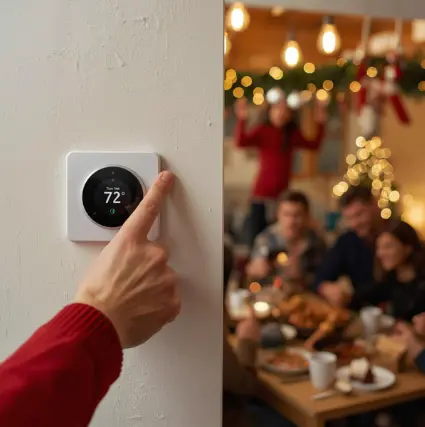
Test your thermostat’s accuracy. Compare it to a separate thermometer. A difference greater than 2–3 degrees means inaccurate readings and inconsistent comfort.
Consider upgrading to a smart thermostat before the holidays for more reliable temperature control.
One Week Before: Professional Inspection and Tune-Up
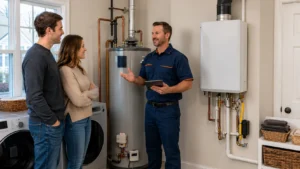
If it’s been more than a year since your last furnace maintenance, schedule a tune-up with M&S Technician at least one week before your event.
During a pre-holiday tune-up, we focus on reliability under stress:
We clean burners and heat exchangers for maximum efficiency. Longer runtime during gatherings requires clean components.
We tighten all electrical connections to prevent intermittent failures.
We test your blower motor under load. A blower that works during normal operation may fail during extended cycles.
We inspect your heat exchanger for cracks to ensure safe operation.
What this gives you: peace of mind. You can host confidently knowing your system is optimized for heavy use.
The Day Before: Final Preparations
Twenty-four hours before guests arrive, complete these checks:
Do a full temperature test. Set your thermostat to party temperature and ensure your system maintains it for at least two hours.
Check temperatures in all rooms and adjust vents as needed.
Clear the area around your furnace and vents. Make sure nothing is blocking airflow.
Stock up on extra filters. You may need more than one during the holiday season.
Prepare a backup plan. Program (908) 528-0535 into your phone for emergency heating repair in Woodland Park.
Party Day: Managing Your System During the Event
The big day is here. Smart HVAC management will keep guests comfortable and prevent system stress.
Set your thermostat and leave it alone. Choose 68–70 degrees—guests and cooking will naturally warm your home.
Constantly adjusting your thermostat forces your furnace into stressful short cycling.
Manage door traffic. Frequent door openings dump cold air into your home. Use a greeter to minimize open-door time.
Use ceiling fans in reverse. Run them clockwise on low to push warm air down gently.
Monitor your system during the event. Watch thermostat fluctuations and listen for unusual sounds.
The Kitchen Factor: How Cooking Affects Your HVAC
Your holiday cooking routine affects indoor temperatures more than you think.
Ovens release significant heat. Your thermostat might read warmer than other parts of your home.
Range hoods pull cold air into your home to replace the exhausted air, increasing furnace workload.
Timing matters. Pre-event baking can warm your home naturally, while cooking during the party may cause temperature swings.
After the Party: Post-Event System Care
Once guests leave, don’t forget your HVAC system needs attention too.
Check your air filter. Parties generate more airborne particles—cooking, traffic, and frequent door openings.
Hold the filter to light; if little light passes through, replace it.
Return thermostat to normal settings to avoid wasting energy.
Listen for new system sounds over the next few days—stress may reveal emerging issues.
Multiple Gatherings: Managing Your System Through Holiday Season
If you’re hosting several events:
Monitor and replace your air filter weekly.
Schedule a mid-season check-up with M&S Technician if you’re hosting multiple gatherings.
Track your system’s performance. Slower heat recovery or longer runtimes may indicate developing problems.
When Hosting Reveals Hidden HVAC Problems
Holiday hosting often exposes issues that aren’t obvious during daily life:
- Rooms that stay cold even with full furnace operation indicate airflow or insulation issues.
- Humidity problems such as excessive dryness or foggy windows show imbalanced moisture control.
- Unpleasant odors during long furnace cycles may point to mold, dust, or electrical issues.
If any of these appear, schedule a professional inspection before your next gathering.
The Investment That Pays Off: Pre-Holiday HVAC Service
Some homeowners hesitate to schedule pre-holiday HVAC service, but here’s the truth:
A tune-up costs $150–200. An emergency call during your party costs $300–500—before repair costs.
Maintenance improves efficiency, lowering your energy bill during the months when your furnace runs most.
But the biggest benefit is peace of mind. A properly serviced system keeps your gatherings stress-free.
Your Holiday Hosting HVAC Checklist Summary
Two weeks before:
- Test your system under load
- Check airflow in all rooms
- Replace air filter
- Verify thermostat accuracy
One week before:
- Schedule professional tune-up
- Address any issues found
- Stock up on spare filters
Day before:
- Full temperature test
- Clear furnace and vent areas
- Program emergency contact
Day of event:
- Set thermostat strategically
- Manage door traffic
- Use ceiling fans appropriately
- Monitor system performance
After the party:
- Check air filter
- Return to normal settings
- Listen for new system issues
Make This Your Most Comfortable Holiday Season
Holiday hosting should be about creating warm memories, not worrying about keeping your home warm. Preparation makes all the difference.
Don’t wait until the day before your party to think about your furnace. Call M&S Technician today at (908) 528-0535 to schedule your pre-holiday tune-up.
We serve Woodland Park and all of Bergen County with reliable, responsive HVAC service tailored to the unique demands of holiday hosting.
Schedule your tune-up now and enjoy stress-free celebrations knowing your home will stay warm, comfortable, and perfectly prepared for every gathering.
Learn more about the differences between heating systems and how they function seasonally from The Department of Energy.